ZENTRIA QUALITY OS

Food safety operations that stay connected from control to proof.

Zentria gives teams one product surface for record, evidence, owners, and accountable action. It does not replace human decision making.

CONTROL → OPERATE → DETECT → INVESTIGATE → ACT → TRACE → ASSURE → PROVE

Problem statement

The record exists. The trail is fragmented.

Records, limits, findings, evidence, owners, CAPA, verification, traceability, and proof often sit in separate silos. The result is delayed decisions and weaker audit narratives.

Accountability is not replaced.

Conceptual product representation

A controlled example showing how Zentria can connect an exception to accountable action and review-ready proof.

Decision mechanism

Accountable decisions are the operating layer.

Zentria organizes work by expectation, capture, verification, and decision trail. That gives teams a single sequence for review and audit preparation.

  1. 01

    Evidence is grouped around what must be proven, not where it was entered.

  2. 02

    Ownership and state transitions remain explicit for every notable operational event.

  3. 03

    Each disposition records a chain from control intent to verified outcome.

Conceptual food production environment with a quality professional reviewing a controlled record beside the line
Operate / verifyControl has to survive the production floor.Conceptual production environment. Not customer evidence.

Evidence chain

The operating chain stays connected from CONTROL to PROVE.

  1. CONTROL

    Documents, SOPs, specifications, HACCP/PCP controls, and decision owners define expected behavior.

  2. OPERATE

    Daily forms, inspections, production, receiving, sanitation, and evidence capture record what happened.

  3. DETECT

    Limits, missing records, deviations, NCRs, and complaints are surfaced immediately for review.

  4. INVESTIGATE

    Root-cause work links summary review, 5 Why, fishbone, and 8D evidence.

  5. ACT

    Corrective action, hold, disposition, change control, and verification are assigned and tracked.

  6. TRACE

    Supplier, lot, batch, shipment, and recall context stays linked back to exceptions and actions.

  7. ASSURE

    Training, calibration, maintenance, sanitation, and competency checks evidence control effectiveness.

  8. PROVE

    Audit binders, evidence packages, reports, and management review close the operational loop.

Product interface

One operating model, visible in the work.

Move from corrective action to material genealogy and audit evidence without losing the record, decision, owner, or verification trail.

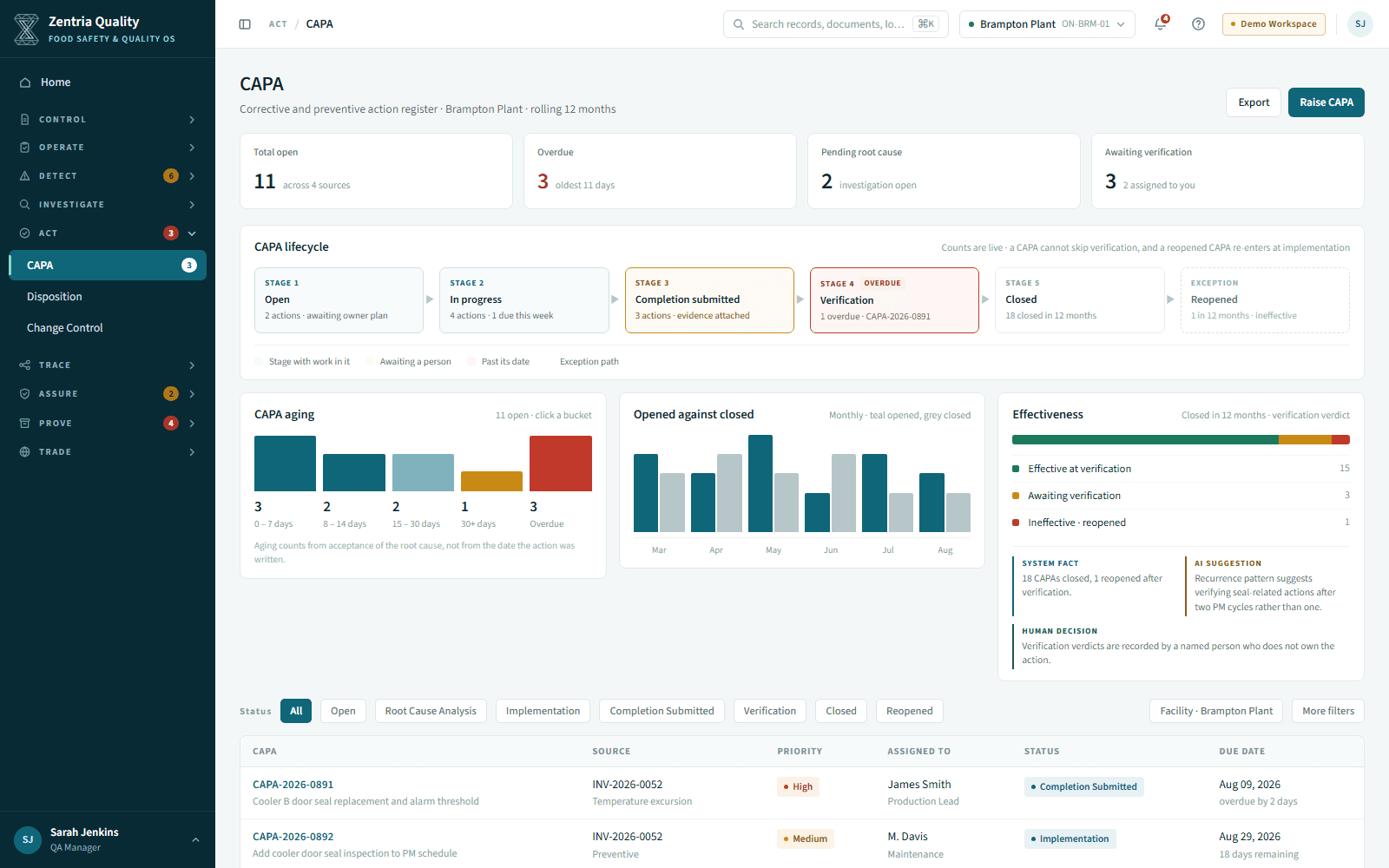
01ACT / CAPA
Zentria CAPA register showing lifecycle stages, verification status, and assigned owners

Action remains accountable through closure.

Corrective action stays connected to its source, owner, due date, evidence, and independent verification.

02TRACE / GENEALOGY
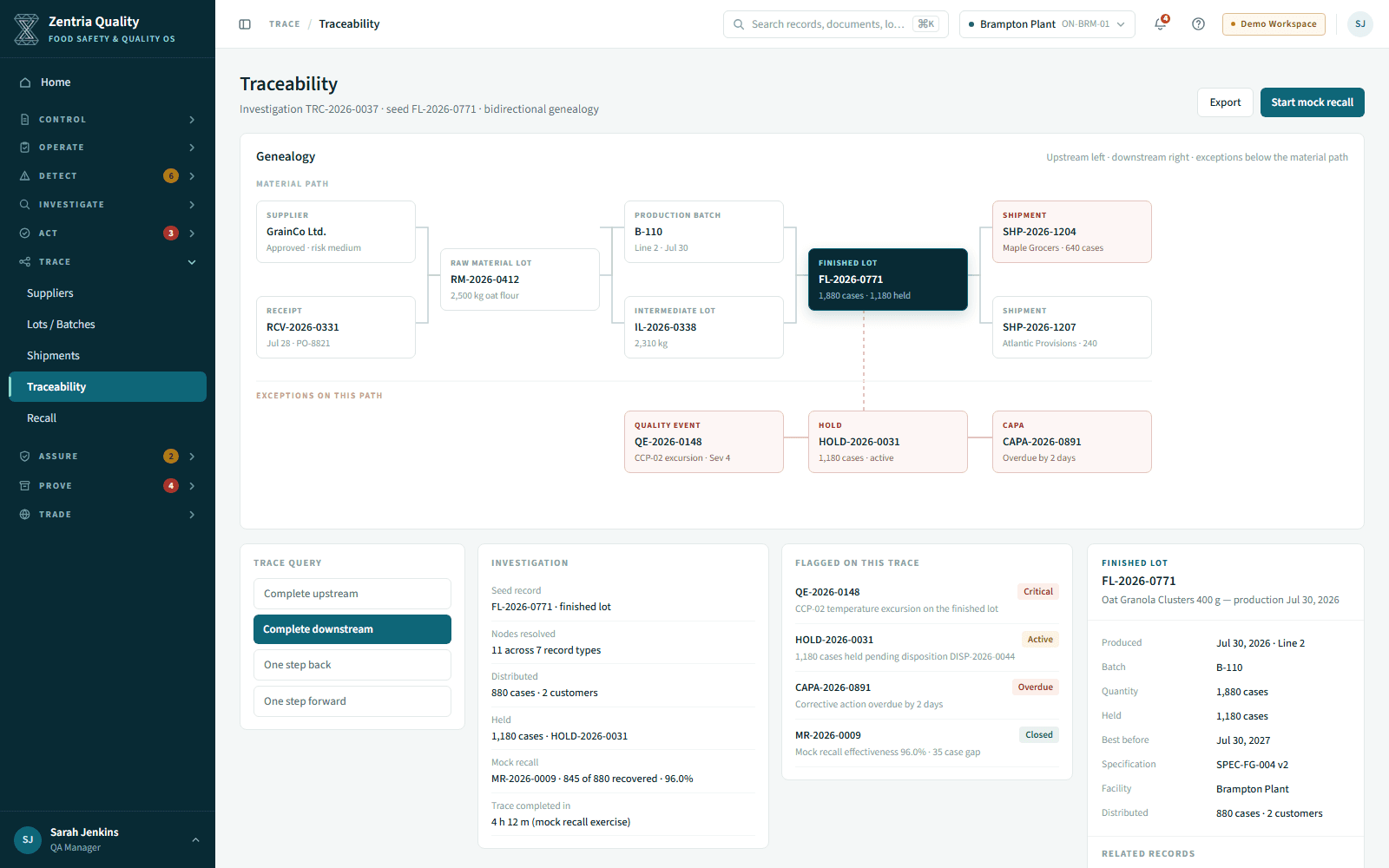
Zentria traceability view connecting supplier, raw material lot, production batch, finished lot, shipments, hold, and CAPA

Follow the material path and its exceptions.

A bidirectional genealogy keeps supplier, lot, batch, shipment, hold, quality event, and recall context together.

03PROVE / EVIDENCE
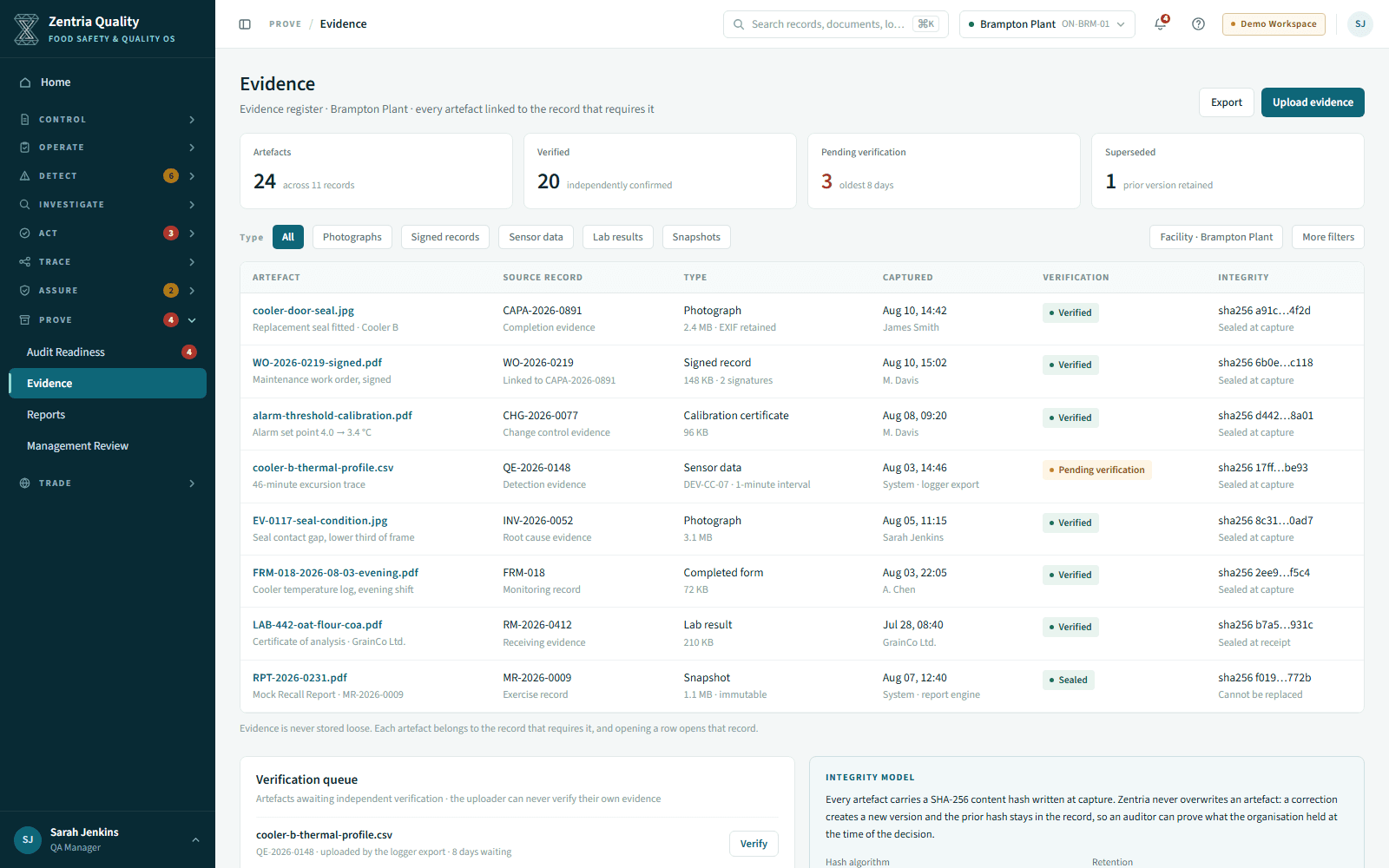
Zentria evidence register showing linked artefacts, source records, verification state, and integrity information

Evidence is attached to the record that requires it.

Every artefact belongs to a source record, carries a verification state, and contributes to decision-ready proof.

Product interface preview. Names, records, locations, and operational values shown here are fictional sample data, not customer evidence.

AI assistance

AI assists. Humans decide.

AI assistance boundary: useful automation is selective for summarization, drafting, and consistency checks. Final approvals, accountabilities, dispositions, and certification outcomes remain human responsibilities.

  • AI can flag pattern variance and surface relevant linked records.
  • AI can draft review notes and suggested checks.
  • AI cannot replace approvals, disposition logic, or certification outcomes.
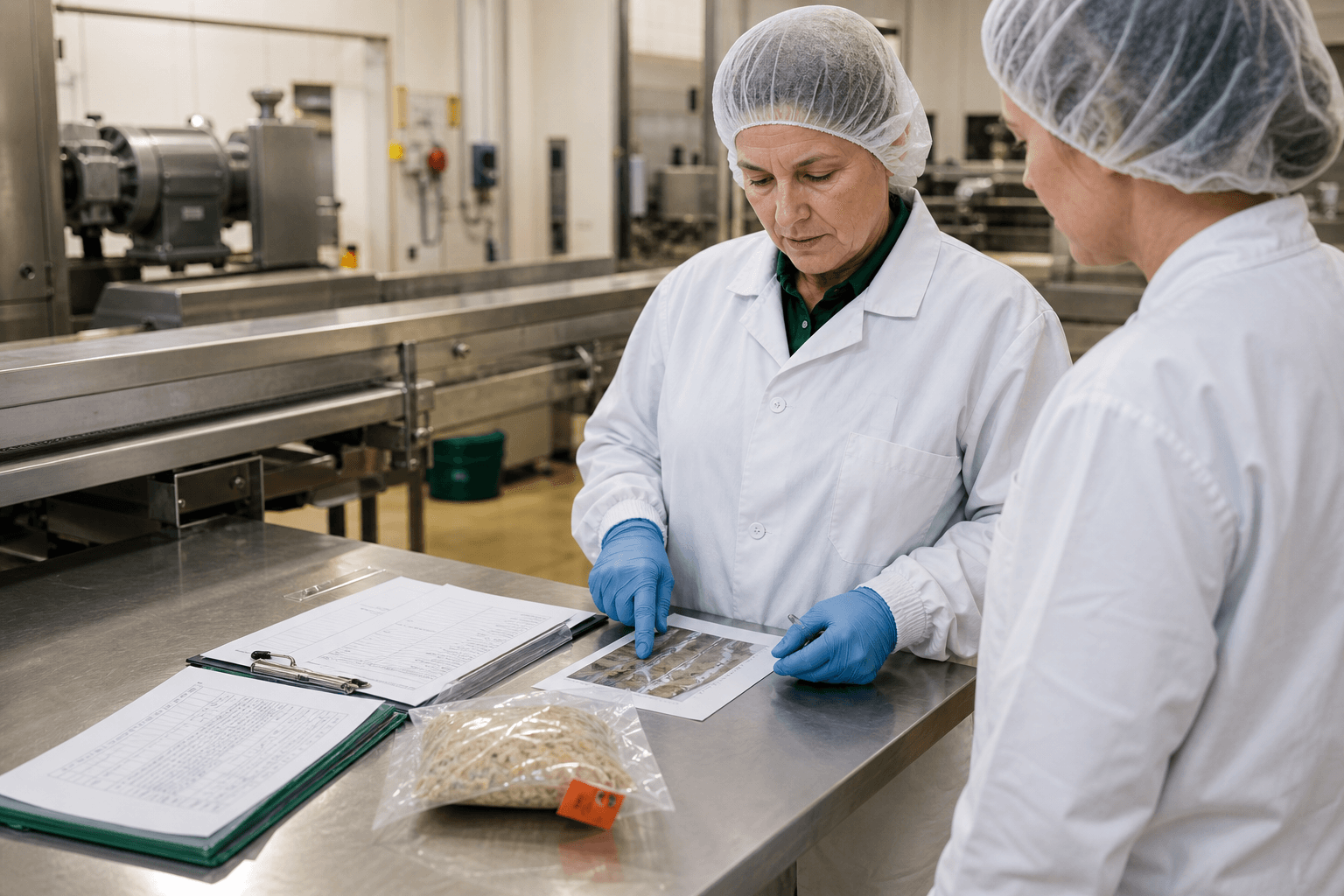
Conceptual quality-team review showing people examining a deviation record, sample, and linked evidence
AI assistsEvidence can be surfaced. The accountable decision stays human.Conceptual production environment. Not customer evidence.

Readiness language

Readiness, not promises.

The operating system supports food quality teams in preparing for audit and operational maturity. It does not claim automatic certification or regulatory outcomes.

Trade and import-export controls are supported for applicable operations, but are adjacent to the core food safety and quality workflow.Review trade capabilities

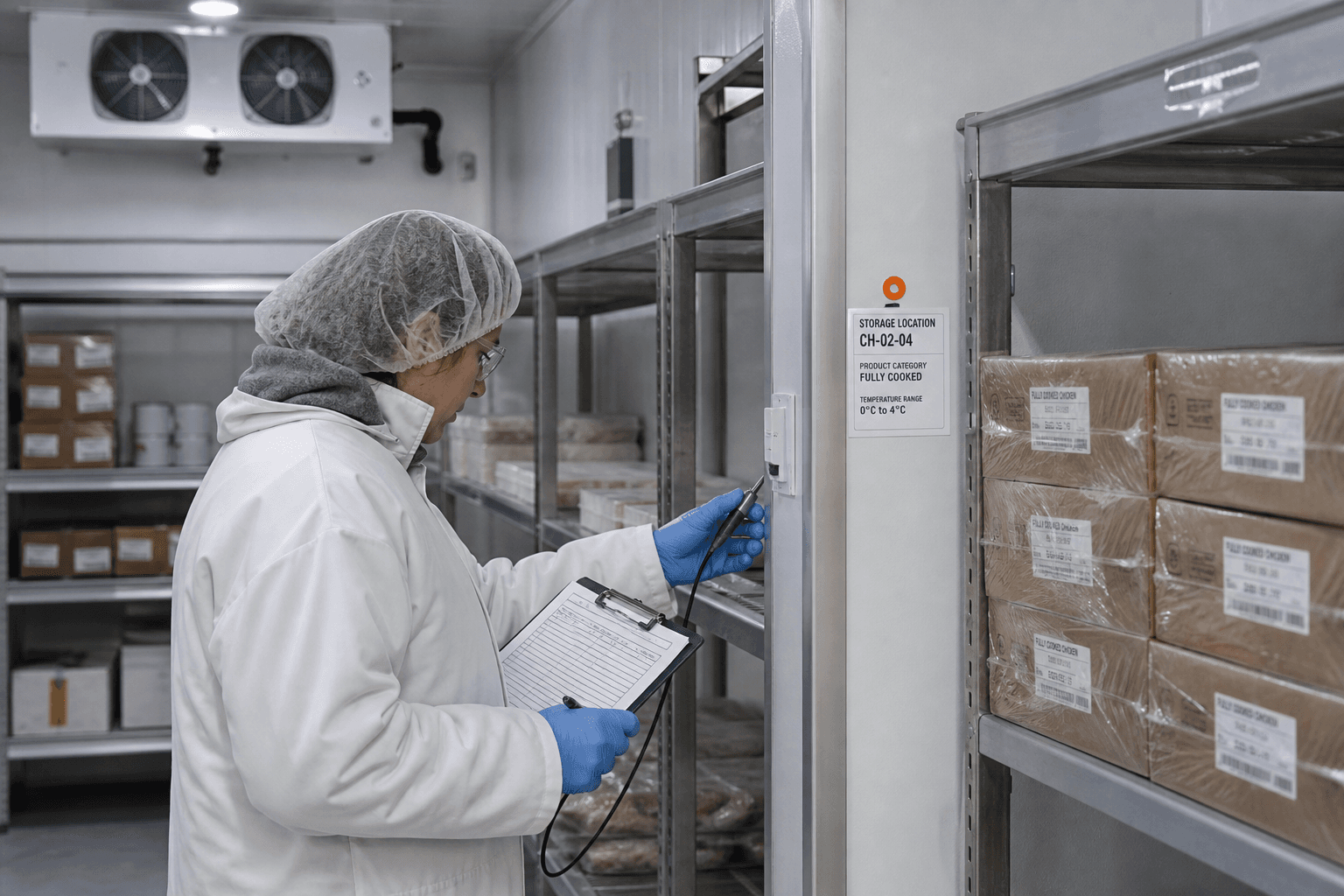
Conceptual cold-storage verification with a quality professional checking a controlled location
Assure / proveReadiness is built from verification, not from claims.Conceptual production environment. Not certification evidence.

Capability-state register

Current capability positions

Every capability is published with one explicit state: CURRENT, FOUNDATION, or VISION.

CONTROL

Documents, SOPs, specifications, HACCP/PCP controls, and decision owners define expected behavior.

  • Controlled documents and specificationsCURRENT

    Versioned content, owners, approvals, and expiry signals for SOPs, forms, and standards.

    Evidence-backed foundation for expected controls.

  • HACCP/PCP structures and linksFOUNDATION

    Structured hazardous-analysis logic and preventive-control links are represented in a connected model.

    Critical limits and validation context are modeled.

OPERATE

Daily forms, inspections, production, receiving, sanitation, and evidence capture record what happened.

  • Operational record and form workflowCURRENT

    Daily production, receiving, sanitation, and pre-op evidence tied to responsible roles and scopes.

    Designed as the factual history of what happened.

  • Deterministic scheduling and missing-record detectionFOUNDATION

    Expected checks and recurring record generation establish what should exist before review.

DETECT

Limits, missing records, deviations, NCRs, and complaints are surfaced immediately for review.

  • Exception and limit detectionCURRENT

    Automated and rule-based detection where possible for excursions and required-record gaps.

    Exception states remain decision candidates until reviewed.

INVESTIGATE

Root-cause work links summary review, 5 Why, fishbone, and 8D evidence.

  • Investigation methods and incident analysisVISION

    5 Why, fishbone, and 8D surfaces are planned as part of a connected incident-response flow.

ACT

Corrective action, hold, disposition, change control, and verification are assigned and tracked.

  • CAPA, hold, and disposition workflowsFOUNDATION

    Corrective and preventive actions move through owners, due dates, and evidence requirements.

    Closure depends on verification outcomes.

TRACE

Supplier, lot, batch, shipment, and recall context stays linked back to exceptions and actions.

  • Supplier, lot, batch, and shipment traceabilityCURRENT

    Recall-ready links between suppliers, lots, transformations, and outbound shipments.

ASSURE

Training, calibration, maintenance, sanitation, and competency checks evidence control effectiveness.

  • Training, calibration, and maintenance assuranceFOUNDATION

    Competency, maintenance, and EMP readiness records provide operational confidence.

    Competency and training are explicit accountability artifacts.

PROVE

Audit binders, evidence packages, reports, and management review close the operational loop.
  • Report and audit-package generationVISION

    Reviewable report snapshots and management-review context for evidence-first operations.

Need a practical next step?

Request a workflow review to map your current records, owners, and decision points.

Request a workflow review

Controlled growth through accountable evidence.

If your records are real and your teams are accountable, this is the next practical step toward a cleaner, reviewable quality system.